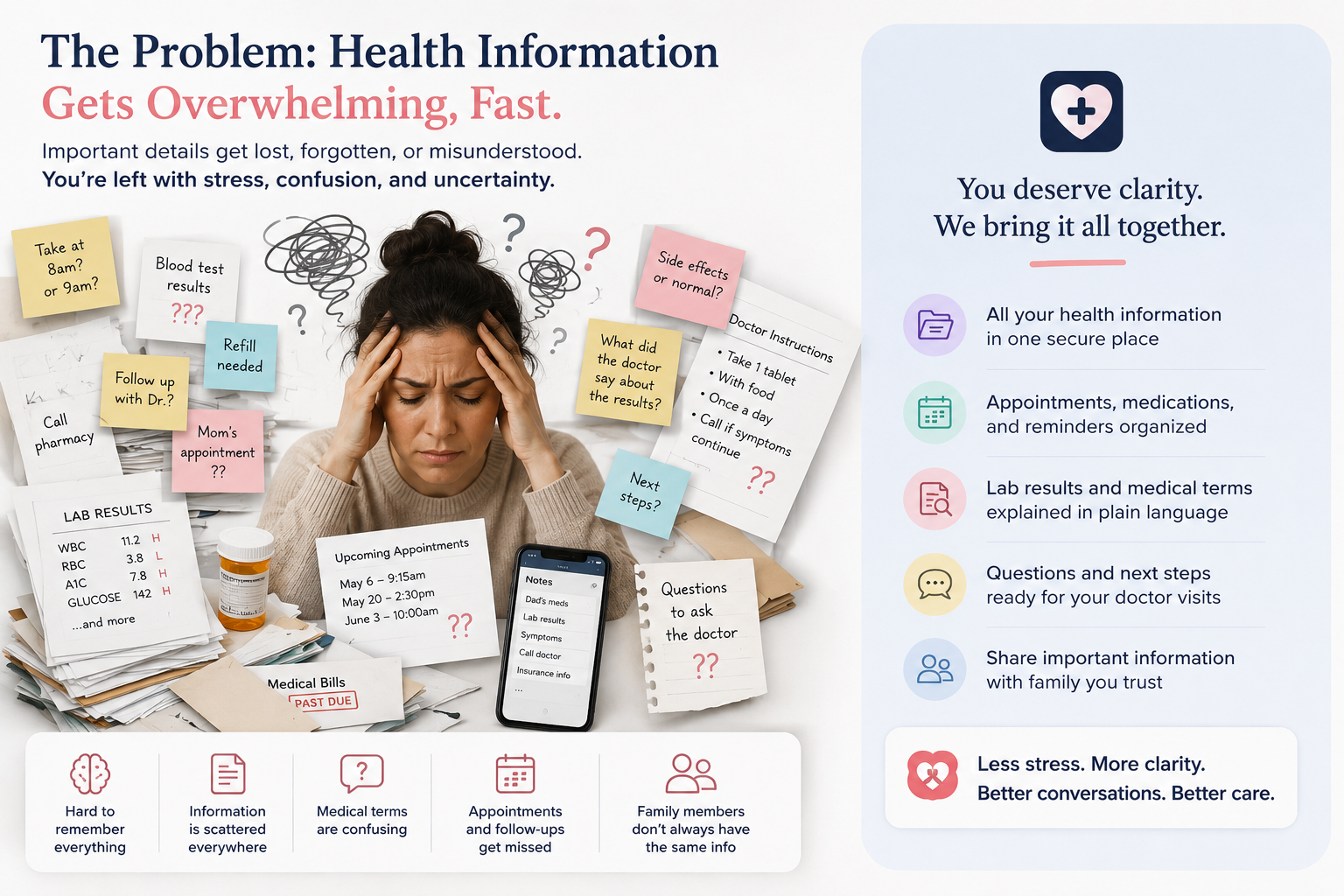
Before: scattered care admin
Important details live in too many places, especially when someone is caring for a parent, child, partner, or relative.
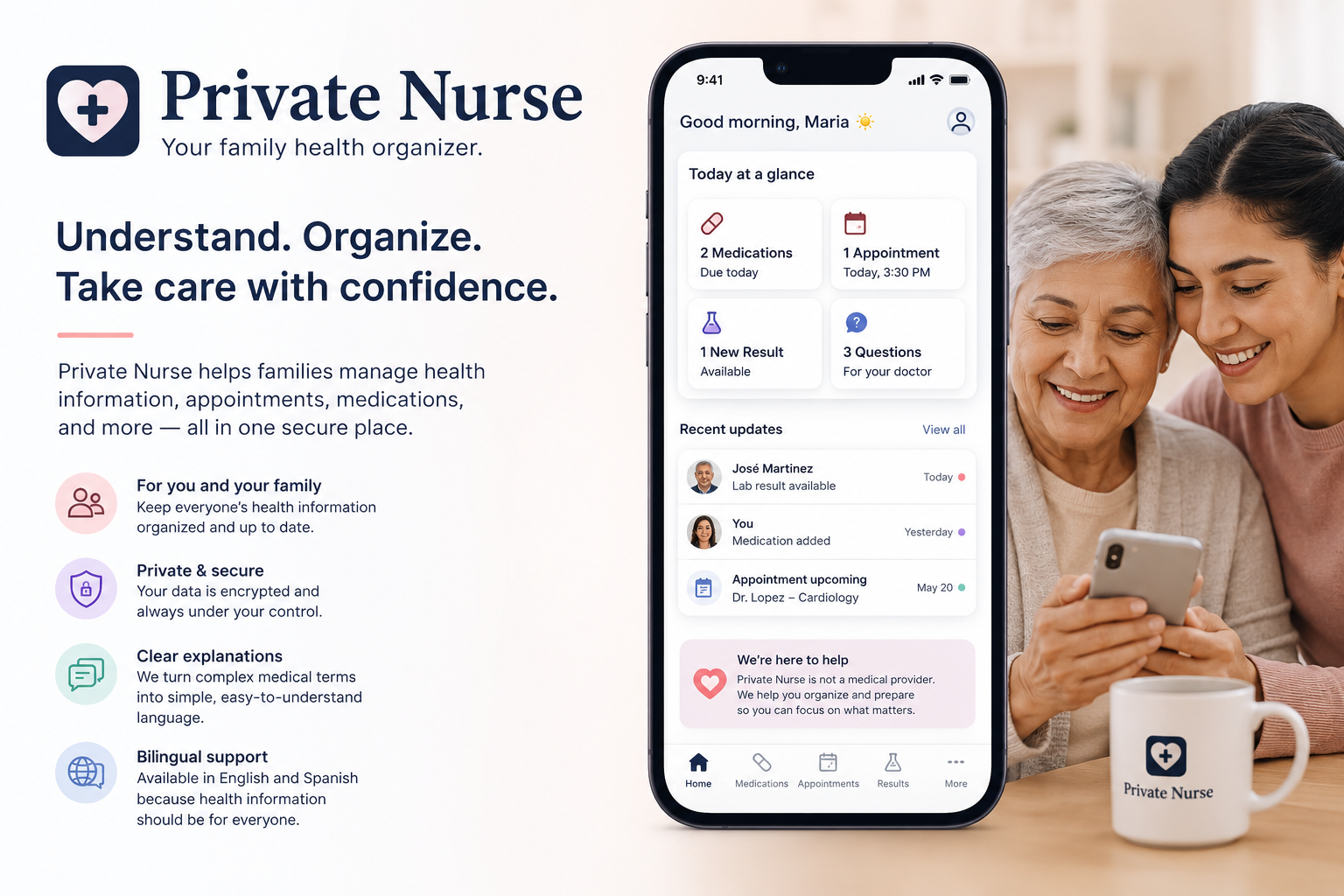
A privacy-first AI health organizer designed to help families manage care information with more clarity, structure, and confidence.
AI-assisted. Human-confirmed. Not medical advice.
The product helps caregivers organize medications, appointments, symptoms, lab results, doctor notes, and questions for medical visits while keeping healthcare decisions with licensed professionals.
Families often manage health information across paper notes, patient portals, text messages, calendars, medication labels, and memory. That makes it easy to miss details before a doctor visit.
Important details live in too many places, especially when someone is caring for a parent, child, partner, or relative.
Private Nurse turns scattered notes into organized records, visit summaries, reminders, and questions for the care team.
Medication clarification, symptom timeline, lab question, and follow-up task prepared for the next visit.
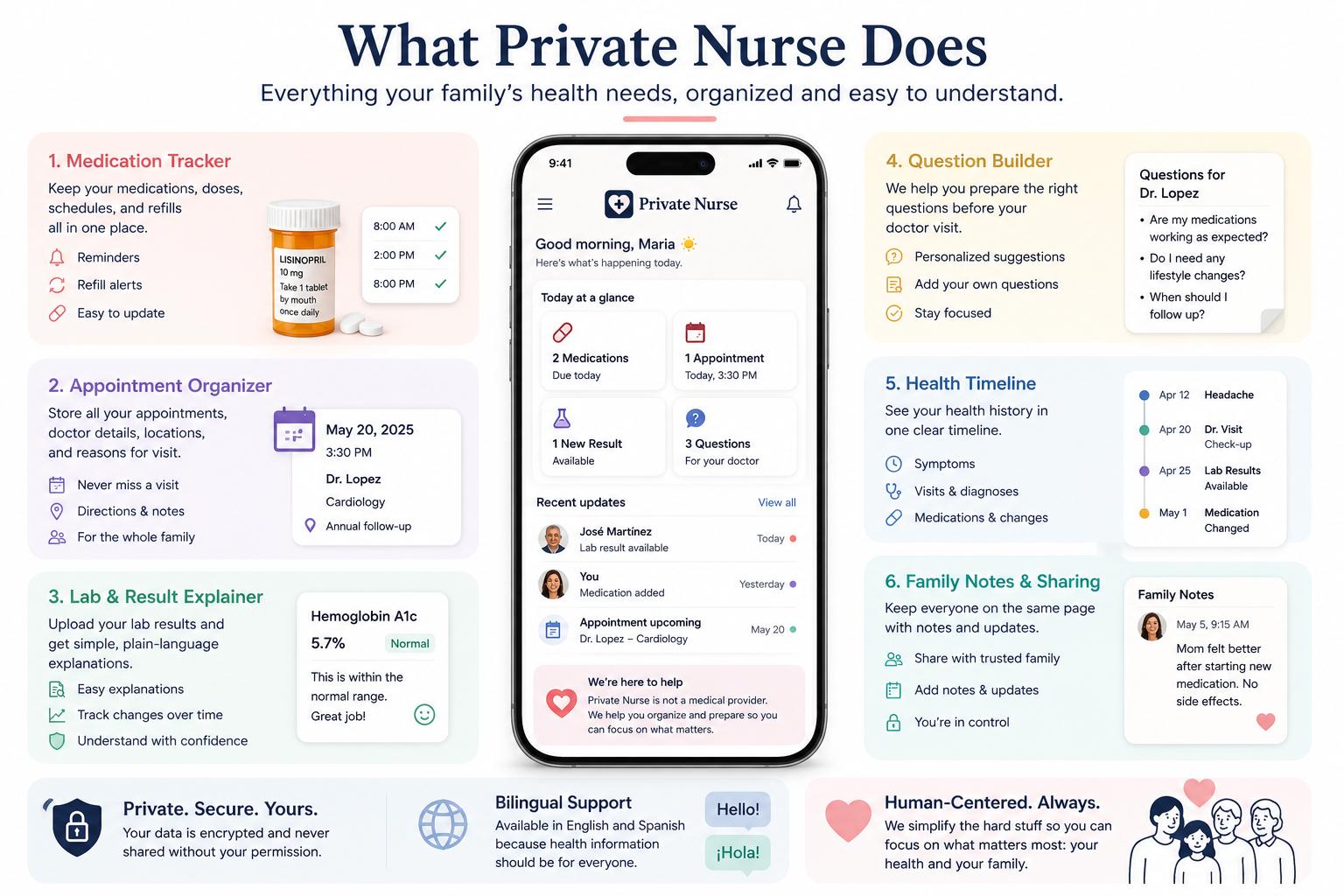
Private Nurse is designed as a system, not a single feature. Each module supports a real caregiver job: tracking, remembering, preparing, sharing, and asking better questions.
Organize care by family member.
Track names, dosage, schedule, and notes.
Prepare for upcoming visits.
Record changes over time.
Store and simplify medical information.
Keep instructions and follow-ups organized.
Prepare better questions for the care team.
See what happened and when.
This project is not about making AI sound medically intelligent. It is about reducing confusion during stressful care situations so families can feel more prepared, organized, and supported.
The screen sequence shows the concept moving from problem context to care modules, plain-language explanations, appointments, questions, timeline, and privacy.
The dashboard prioritizes upcoming visits, active medication questions, recent updates, and next steps.

Shows how health information becomes scattered and overwhelming.

Shows the product as a care organization system.

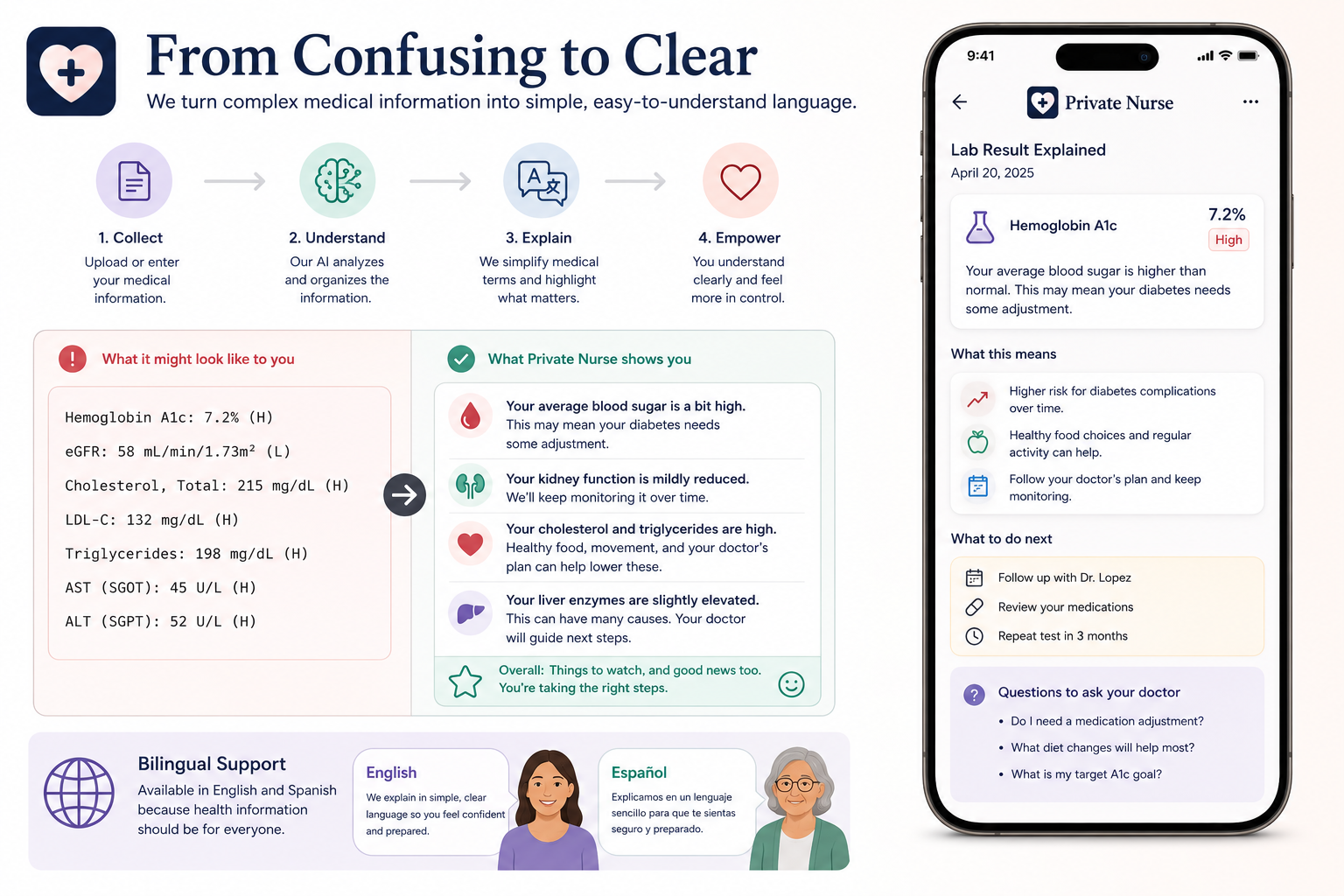
Translates confusing medical language into clearer questions and summaries.

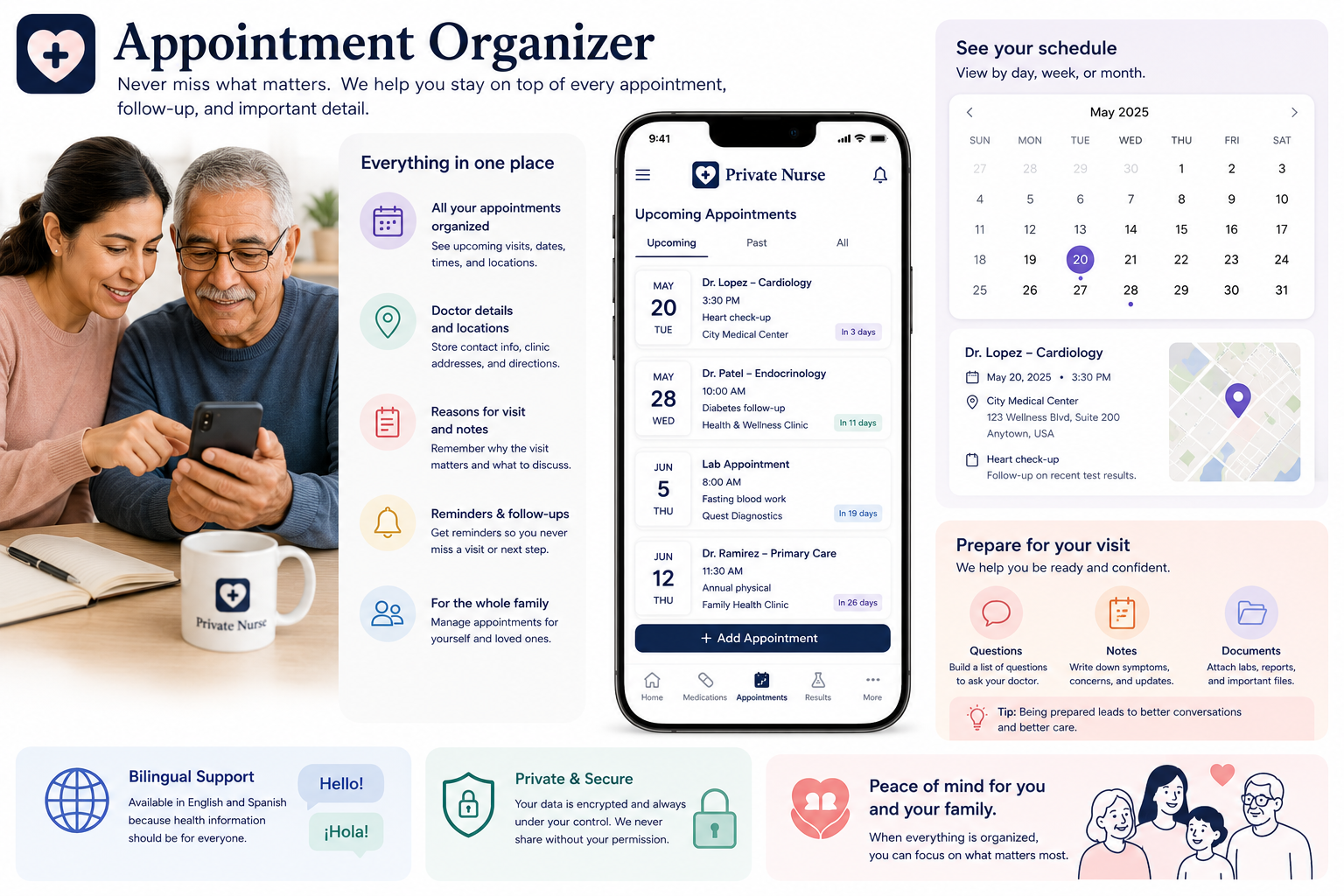
Organizes visits, reminders, documents, and preparation tasks.

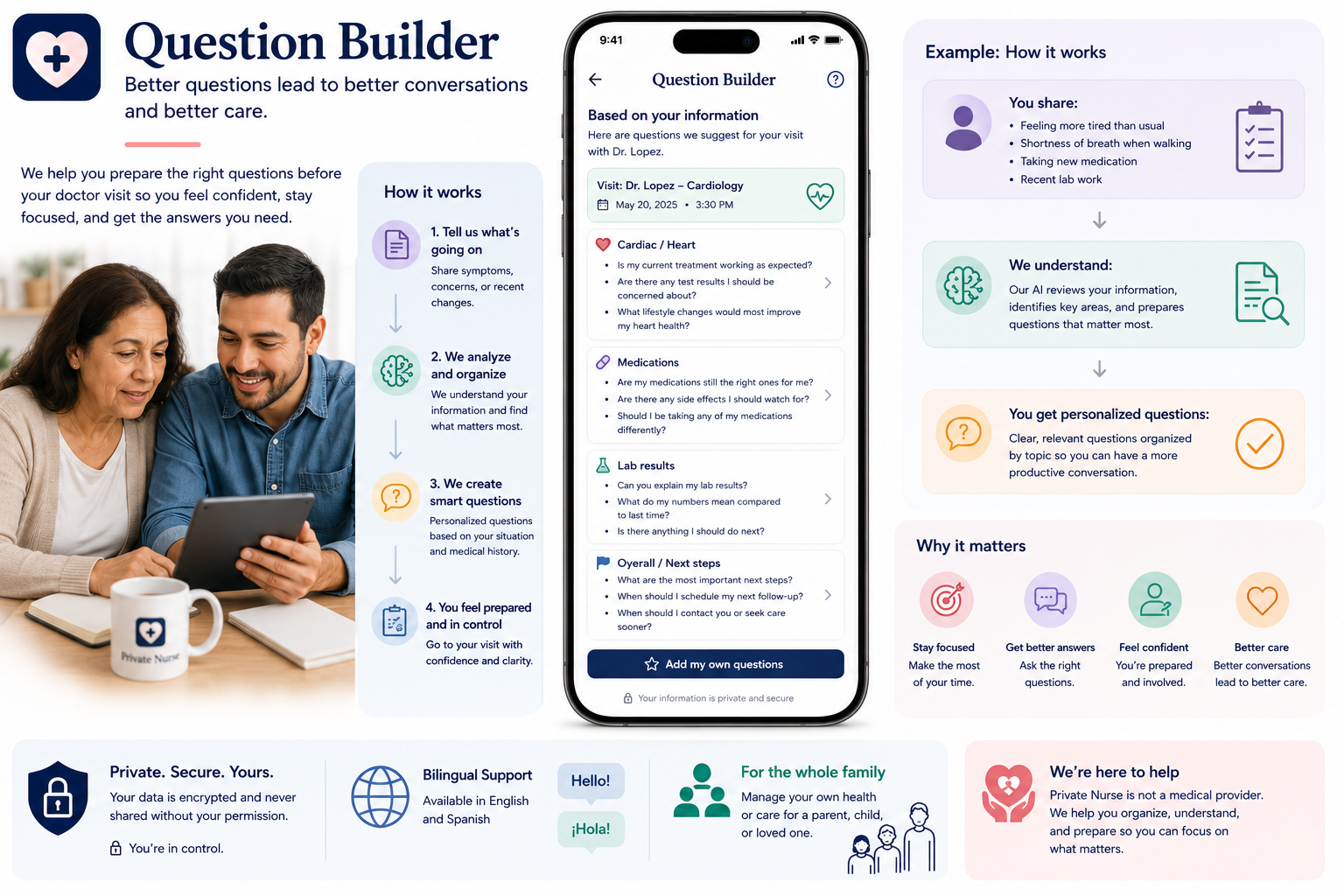
Helps families prepare practical questions before healthcare visits.

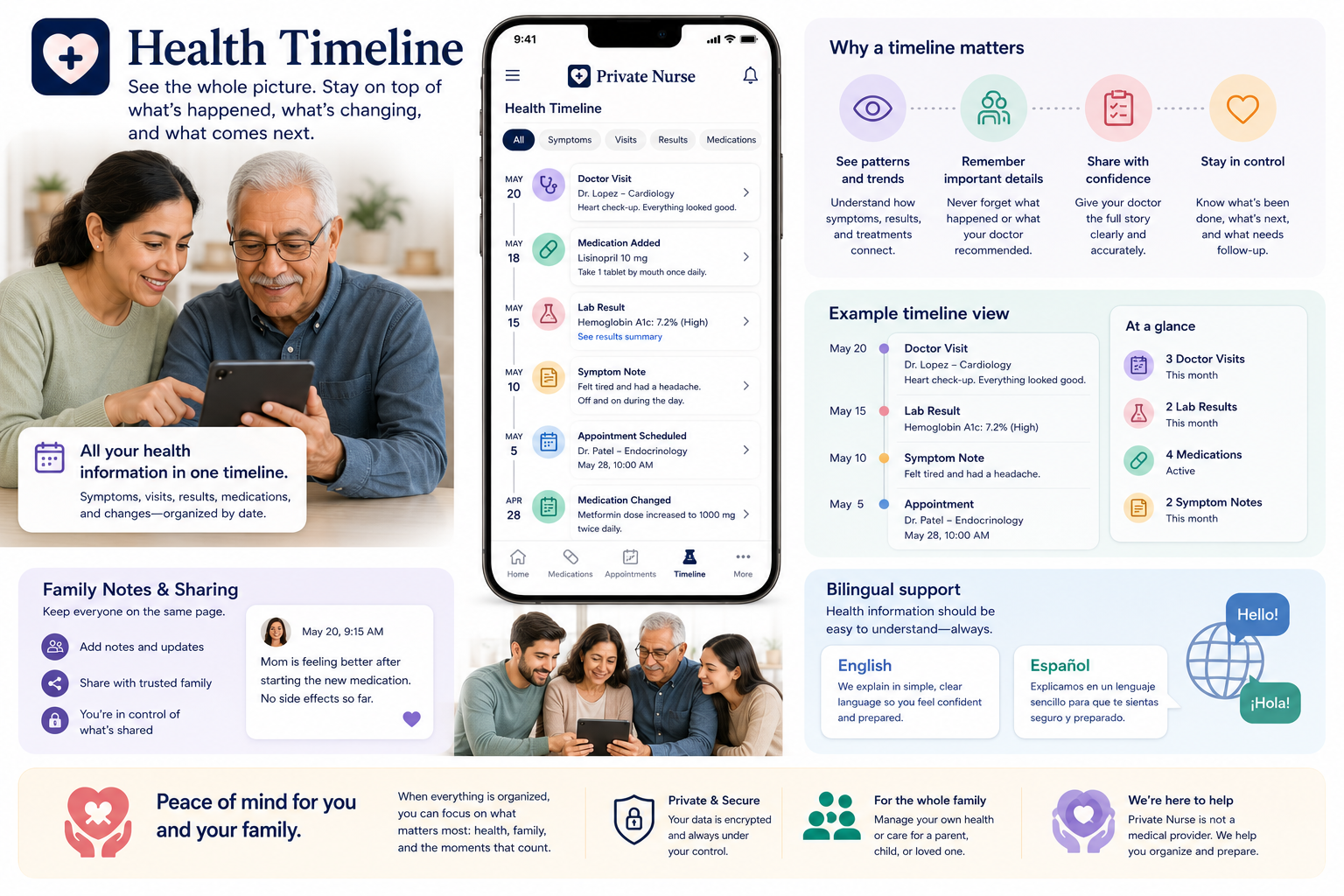
Shows symptoms, medications, appointments, follow-ups, and family notes over time.
Protected accounts, user-owned profiles, secure AI routes, careful logging, and delete controls.
Because health information is personal, privacy is treated as part of the product experience, not a footnote.
The journey shows how the concept becomes practical in a real care situation: create a profile, capture details, simplify language, prepare questions, and bring a clearer summary to the doctor.
Create a health profile for a parent or family member.
Add medications and appointment information.
Log symptoms, lab results, and new concerns.
Capture doctor instructions after a visit.
Use AI to explain confusing language in plain terms.
Generate questions before the next appointment.
Use the visit summary during the doctor conversation.
Private Nurse uses AI to summarize user-provided information, explain medical language in plain terms, and suggest questions to ask a doctor. It does not diagnose, prescribe, recommend treatment, or replace licensed healthcare professionals.
Because health information is personal, Private Nurse is designed with privacy, secure authentication, user-owned records, and careful AI boundaries.
Health profiles sit behind authenticated access and user-controlled records.
Families should be able to edit, export, and delete records when needed.
AI support should happen behind protected routes with no exposed API keys.
The product should avoid retaining sensitive details that are not needed for the user experience.
Users should always know when output is AI-assisted and requires human confirmation.
Sensitive records need clear removal controls, not hidden account-management friction.
The work included product strategy, user flows, interface structure, safety boundaries, AI use cases, workflow thinking, and visual direction.
Clarified the use case around family caregivers and overwhelmed health information.
Structured the product around profiles, medications, appointments, notes, and visit prep.
Defined AI as a support layer for summaries, plain language, and questions.
Used soft clinical cues, clear states, and calm hierarchy to reduce cognitive load.
Connected appointments, medications, symptoms, doctor notes, family updates, and summaries.
Positioned the product as preparation support, not medical decision-making.
The concept explores how families can better organize health information and prepare for care conversations without presenting the product as a finished medical device.
Product positioning, visual direction, information architecture, and workflow logic.
Designed as a product concept demo for family care organization and AI-assisted summaries.
Potential next step: secure user accounts, structured records, AI summary routes, and privacy controls.
Not to replace professionals, but to help people feel more prepared, organized, and supported. The result is a product concept that connects human-centered design, ethical AI, privacy awareness, and real-world care coordination.
From scattered health information to calm, prepared care.